
System Studies
Independent Advice
Callisto is a small consultancy company which is totally independent of any equipment manufacturing company or Systems company. This ensures that the client can depend on totally objective advice and analysis.
The small size means that the client enjoys a fully dedicated service with flexibility to meet his requirements.
The small size means that the client enjoys a fully dedicated service with flexibility to meet his requirements.
Overview of our Experience
Callisto has a long history of undertaking Satellite Communications and Systems Design Studies for its clients over many years.
The following list provides a brief overview of our experience in this area:
The following list provides a brief overview of our experience in this area:
26-PROPAG-SAT Mission Feasibility Study
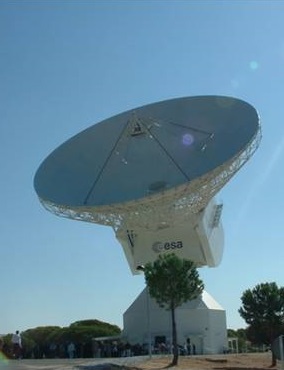
Callisto led a small industrial team to investigate the feasibility of a satellite mission for the measurement of atmospheric propagation in the 26 GHz band for EO satellites. The study, which was undertaken for ESA, considered the use of a CUBESAT flying a Ka-band transmitter payload in polar orbit.
Future Architectures of ESA Deep Space Stations
Callisto has completed an architectural study for ESA investigating solutions for building ESA Deep-Space ground stations for future missions to the outer planets of the solar system. The solutions which were investigated include an option for building a very large antenna of diameter greater than 70m, or building an array of smaller antennas which can be combined together. The study addressed not only the engineering challenges associated with the various options, but also the cost, with a clear goal of identifying the most cost effective approach.
Study on Fade Mitigation Techniques in K-Band SATCOMs
Callisto undertook a study into techniques of Fade Mitigation due to weather for K-Band SATCOM services. The objective of this study was to assess and quantify the benefits of using a dual mode LNA to improve communication link availability.
Ka-Band Market Survey – MTG Ground Stations
Callisto has undertaken an analysis of ground station RF equipment in the 26-27 GHz band which will be used by the third generation of METEOSAT to download payload data.
Mission Analysis Studies and CCSDS Bandwidth Efficient Modulation Schemes
The study involved the analysis of end-to-end communications links and involved the development of simulation models using Matlab/Simulink. The study included the investigation of SRRC OQPSK and GMSK modulation schemes.
Study on Future Multiple Uplink per Aperture Access Schemes
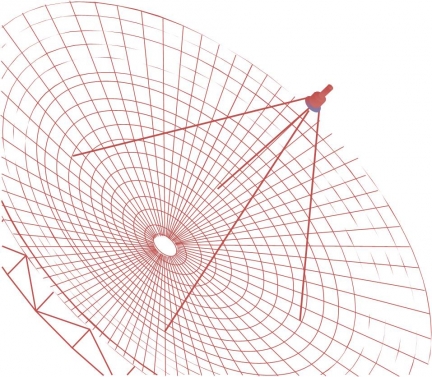
The study addressed the problem of the support of multiple missions simultaneously using a single Deep Space Antenna. Such scenarios are of interest when there are multiple spacecraft exploring the same planet in the Solar System. The main problem investigated was the uplink communications that is to be able to transmit two or more telecommand signals using a multiplexing scheme.
Square Kilometre Array Study
Callisto carried out a study on the cryogenics options for the Square Kilometre Array (SKA) Organization. The SKA is expected to use thousands of 15 metre diameter dishes, each equipped with multiple antenna feeds and cryogenic receivers. Callisto's study examined a range of potential technical solutions, aiming to maximize receiver sensitivity whilst keeping the overall cost of system ownership within budget.
Study on G/T Measurement Techniques for Ka Band Active Array Antennas
Callisto has undertaken a study for CNES to devise a method for the measurement of the noise temperature of a Ka band active phased array antenna when mounted in a Compact Antenna Test Chamber.
Study on the use of 25.5-27GHz Band in ESA ground stations
Callisto conducted a study into the feasibility of upgrading ESAs Deep Station ground stations to support reception of high rate telemetry in the 26 GHz band.
CDMA Communications studies
Callisto undertook a communications study into the use of mixed CDMA & FDMA communications system over an Earth - satellite - Earth link. The objective was to assess the feasibility of overlaying a CDMA link on an existing FDMA communications service.
Frequency Plan Analysis
Callisto undertook a study into the introduction of Ka band into ESA ground stations and investigated suitable frequency plans for conversion of Ka band signals to ensure compatibility with existing frequency plans.

For more information, please contact us