
Ground Station Engineering
Ground Station Engineering Services
Callisto was founded in 1993 with presence in the UK, France and Germany. Over this time, Callisto Engineering Services Germany (CESG) has undertaken a wide range of engineering consulting projects, building a reputation as a highly skilled partner to satellite operators, integrators and equipment manufacturers.
Callisto can provide technical consultancy services in subjects related to SATCOMS and satellite ground station projects including:
- Telecommunications link analysis
- Space project mission analysis
- Feasibility studies and budgetary planning studies
- Ground station configuration analysis
- Preparation of ground station specifications
- Equipment market surveys and equipment specification/selection
- Ground station project support in planning and project monitoring
- System, subsystem, equipment acceptance testing
- System upgrade and modification studies
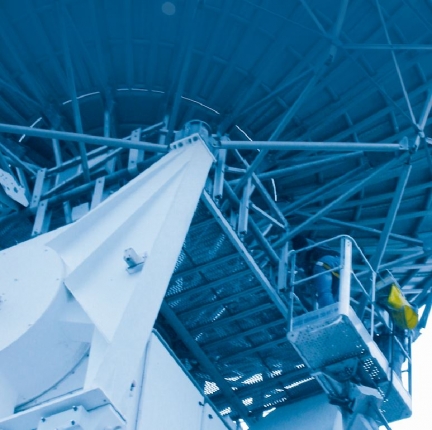
Applications and Sectors
- Deep Space Communications
- Earth Observation
- Radio-astronomy
- Navigation
- Satcoms
- In Orbit Testing (IOT)
- Launch and Early Orbit Phase (LEOP)
- Telemetry, Tracking and Command (TT&C)
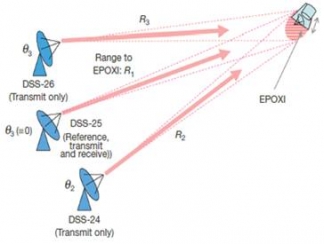
Depth of Technical Expertise
Callisto can provide expertise across the full range of technologies found in satellite ground systems, radio astronomy and VLBI including:
- Antenna systems
- RF & Microwave equipment
- Frequency translation equipment
- IF receivers, modulators and demodulators
- TM/TC processors, ranging systems, codecs
- Spread Spectrum techniques
- Antenna tracking and control
- Automatic monitor and control systems
- Test equipment and automatic test facilities
- Cryogenics and thermal analysis
- Systems Engineering
Client Track Record
Callisto has worked with the major satellite players in the market including:
- EUMETSAT
- Inmarsat
- European Space Agency (ESA)
- Square Kilometer Array Program Office
- French National Space Agency (CNES)
Independent Advice
Callisto is a small consultancy company which is totally independent of any equipment manufacturing company or Systems company.
This ensures that the client can depend on totally objective advice and analysis. The small size means that the client enjoys a fully dedicated service with flexibility to meet the client's requirements.
This ensures that the client can depend on totally objective advice and analysis. The small size means that the client enjoys a fully dedicated service with flexibility to meet the client's requirements.

For more information, please contact us